
Industrial filter papers
PPN
Fast & coarse filtration| Grade | Thicknessmm | Grammageg/m2 | Porositysec | B.F.kg/cm2 |
|---|---|---|---|---|
| PPN 01 | 0.3 | 100 | 5 | 4 |
| PPN 15 | 0.4 | 150 | 7 | 4 |
| PPN 02 | 0.6 | 200 | 10 | 4 |
Scroll to view all specifications →
Cellulose filtration media
We manufacture virgin wood-pulp filter papers for supported industrial filtration, with porosity, bursting strength, particle retention and flow specified together.
Sri Bharathi Tech manufactures and supplies Industrial Filter Papers from Ankleshwar, Gujarat, India, with grade, size and configuration selection based on the buyer’s process and equipment.
Technical product information
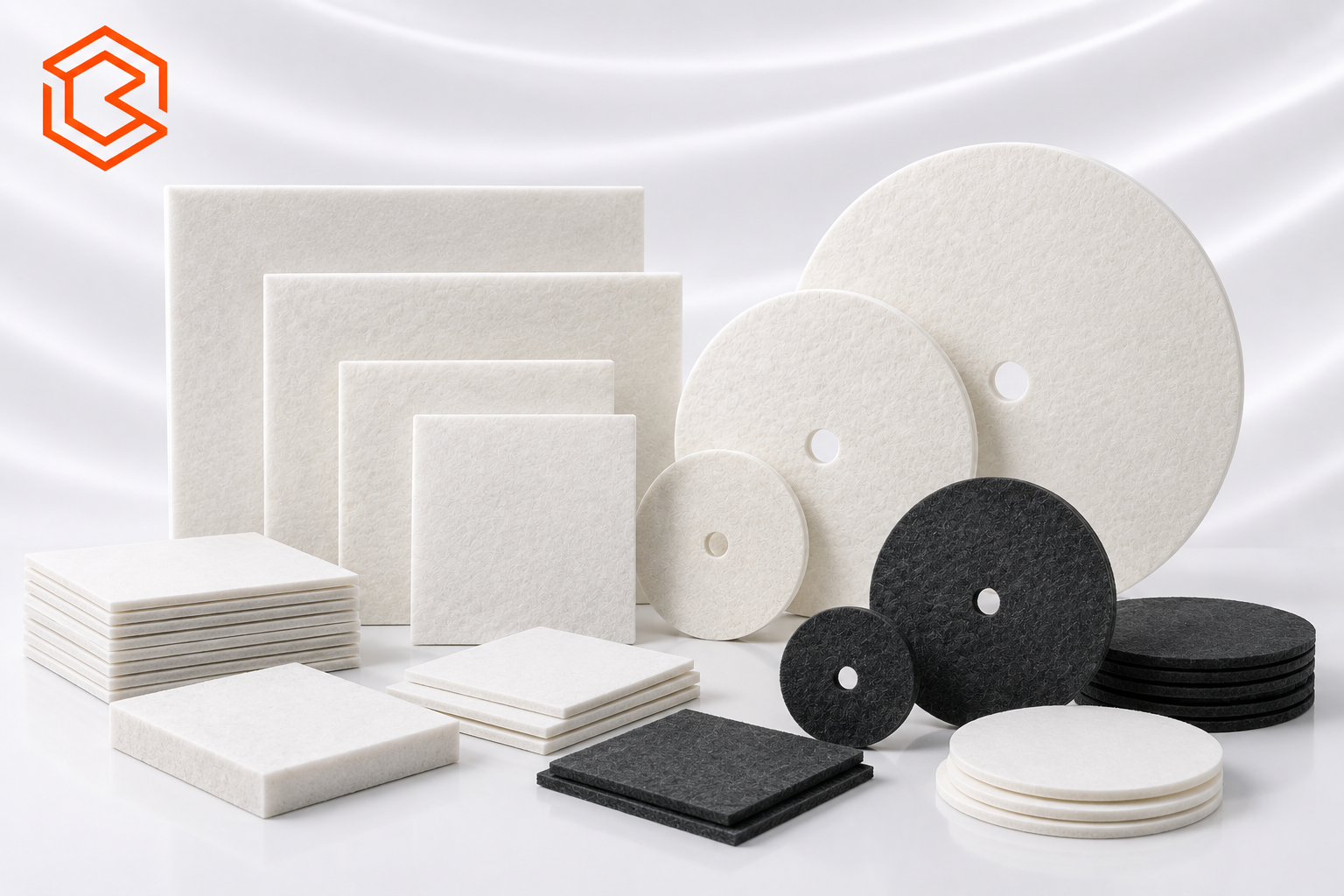
PPN industrial filter papers for fast and coarse filtration. Compare thickness, grammage and porosity to support grade selection for your process.
Manufactured from wood pulp, PPN filter papers provide a practical media option for compatible industrial liquid filtration duties.
Industrial filter papers
| Grade | Thicknessmm | Grammageg/m2 | Porositysec | B.F.kg/cm2 |
|---|---|---|---|---|
| PPN 01 | 0.3 | 100 | 5 | 4 |
| PPN 15 | 0.4 | 150 | 7 | 4 |
| PPN 02 | 0.6 | 200 | 10 | 4 |
Scroll to view all specifications →
Operating principle
Industrial filter paper is a porous fibre sheet that supports fast or coarse filtration by allowing liquid to pass while retaining suspended matter at the surface and within the fibre network. A cake may form and become part of the filtration mechanism as solids accumulate.
Flow and retention must be considered together: an open sheet may deliver rapid throughput but retain fewer fine particles, while a denser sheet can improve clarification at the cost of higher resistance and shorter cycles under heavy solids load.
Media design
Sri Bharathi filter papers are manufactured from virgin wood pulp, with softwood and hardwood furnish options. Premium grades may receive impregnation to balance wet strength and other properties for the intended filtration duty.
Key performance parameters include porosity, bursting factor, particle-retention characteristics and flow rate. These properties should be tied to a test method and grade tolerance before purchasing decisions are made.
What to evaluate
01
Softwood and hardwood pulps are available as raw-material options.
02
The range is positioned for duties where throughput and gross solids removal are important.
03
Premium grades may be impregnated for aqueous strength and application fit.
04
Porosity, bursting factor, retention character and flow rate are key specification fields.
05
Sheets, circles or equipment-specific cut shapes can be discussed against a drawing.
06
Actual fluid testing resolves the tradeoff between clarity, flow and sheet life.
Technical data
The specifications below provide a practical basis for product selection. Final grade and configuration are matched to the intended process conditions.
| Selection parameter | Product details | Engineering relevance |
|---|---|---|
| Fibre source | Virgin softwood or hardwood pulp. | Fibre morphology influences formation, strength and permeability. |
| Porosity | PPN grade values: 5 sec (PPN 01), 7 sec (PPN 15), 10 sec (PPN 02). | Confirm the current test method and tolerance; relates to permeability and filtration speed. |
| Bursting factor | PPN grade values: 4 kg/cm² for PPN 01, PPN 15 and PPN 02. | Confirm the current method and wet/dry basis; indicates mechanical robustness. |
| Particle retention | Characterised by grade and process trial. | Not interchangeable with an absolute membrane rating. |
| Flow rate | Grade- and fluid-specific. | Depends strongly on viscosity, pressure, area and solids loading. |
| Impregnation | Premium grades may be treated for required properties. | Confirm chemistry, extractables and contact suitability. |
| Dimensions | Application-specific converted sheets or discs. | Approved drawing reduces risk of bypass and fit errors. |
Process fit
Industrial filter papers may be used in chemicals, pharmaceuticals, foods, beverages, cosmetics and general process filtration where a supported disposable sheet is appropriate. They can serve as gross particulate media, cake-support layers, prefilters or laboratory/process-development tools.
Questions engineers ask
No. GSM indicates mass per area. Porosity, formation, thickness, fibre furnish, strength and treatment determine how the sheet behaves.
It is a measure related to resistance to rupture under a specified test. The value is meaningful only with its method, units and whether the sample is wet or dry.
Viscosity, temperature, effective area, pressure, solids concentration and cake development may all differ between the test and production equipment.
These papers are generally treated as disposable media. Reuse would require a demonstrated cleaning, integrity and contamination-control procedure.
Continue specifying
Application support
Share your fluid, temperature, desired clarity, existing equipment and dimensions. Our team can then recommend a suitable construction and prepare a quotation.